


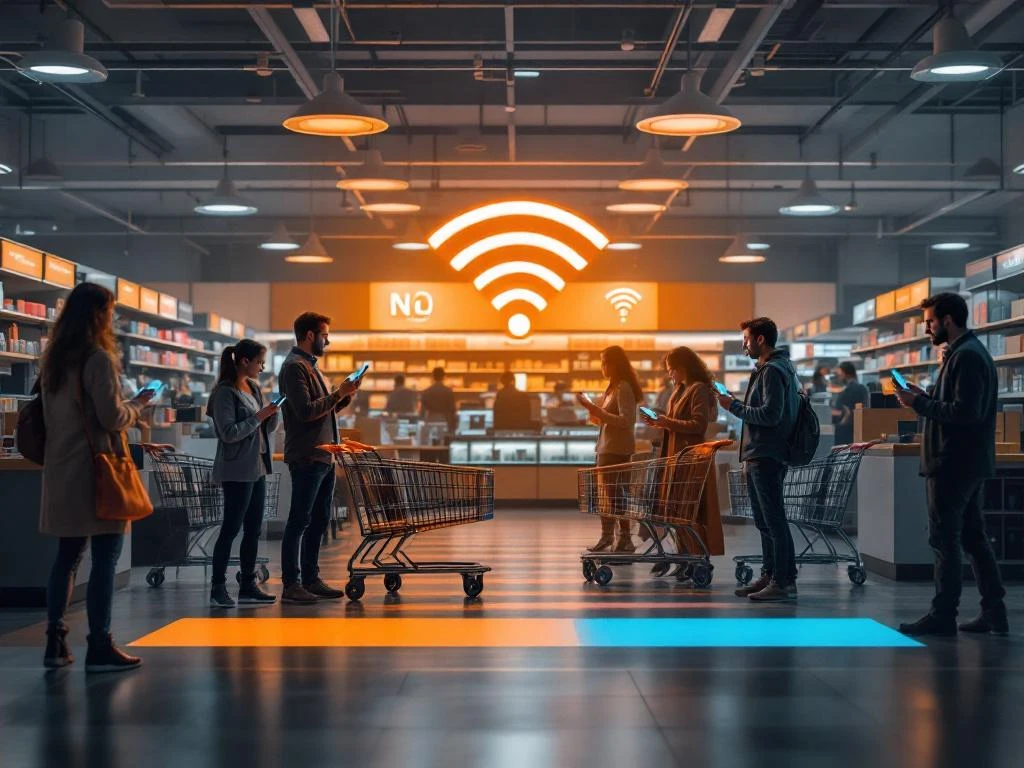
WiFi problems significantly impact customer satisfaction in retail by creating immediate frustration and reducing shopping engagement. When customers can’t access store WiFi, they experience difficulty comparing prices, sharing purchases on social media, and staying connected during their visit. This connectivity failure often leads to shorter shopping sessions, reduced spending, and negative perceptions of the store’s technological capabilities.
What happens when customers can’t connect to store WiFi?
Customers become visibly frustrated within seconds of failed WiFi connection attempts, often trying multiple times before giving up entirely. This immediate disappointment triggers a cascade of negative behaviours that directly impact their shopping experience and perception of your store.
The most common reaction is reduced dwell time. Customers who planned to browse leisurely often cut their visits short when they can’t access the internet. They lose the ability to research products, compare prices with competitors, or seek additional information about items they’re considering. This limitation particularly affects younger shoppers, who rely heavily on digital connectivity for purchase decisions.
Failed connections also prevent customers from sharing their shopping experience on social media platforms. The inability to post photos, check in at your location, or share discoveries with friends eliminates valuable organic marketing opportunities. Many customers view this as a sign that your store lacks modern amenities and technological sophistication.
Customer perception shifts negatively when basic connectivity fails. Shoppers begin questioning other aspects of your store’s reliability and professionalism. They wonder if payment systems might also fail or if the store keeps up with current retail standards. This doubt affects their comfort level and willingness to make significant purchases.
How do WiFi problems affect customer spending and loyalty?
Reliable WiFi access directly correlates with increased customer spending because connected shoppers engage more deeply with products and feel comfortable making informed purchase decisions. When connectivity fails, customers spend less time researching items and often defer purchases until they can properly evaluate options elsewhere.
Price comparison activities suffer tremendously when WiFi is unavailable. Customers can’t verify competitive pricing, read reviews, or research product specifications. This uncertainty leads to purchase hesitation, especially for higher-priced items, where customers want additional confidence before buying. Many simply leave without purchasing anything rather than risk making uninformed decisions.
Social sharing becomes impossible without reliable connectivity, eliminating the natural word-of-mouth marketing that occurs when customers post about their finds. The inability to share experiences reduces the social validation aspect of shopping that many customers enjoy. They miss opportunities to get feedback from friends or family about potential purchases.
Repeat visit intentions decline when customers associate your store with connectivity problems. They remember the frustration and inconvenience, making them less likely to return when other shopping options are available. Customer retention rates drop as people seek retailers who provide seamless technological experiences alongside quality products.
The psychological impact extends beyond the immediate visit. Customers develop negative associations with your brand when basic services fail. They share these frustrating experiences with others, creating ripple effects that influence potential customers who haven’t even visited your store yet.
Why do retail WiFi networks fail when customers need them most?
Retail WiFi networks typically fail during peak shopping hours due to bandwidth limitations and inadequate infrastructure. Most systems aren’t designed to handle the simultaneous connection demands of dozens or hundreds of customers, especially during busy periods like weekends, holidays, or sales events.
High customer density creates overwhelming demand on network resources. Each connected device consumes bandwidth for various activities, including social media browsing, price comparisons, video streaming, and app usage. When too many devices attempt to connect simultaneously, the network becomes congested and either slows dramatically or fails entirely.
Interference from other electronic devices compounds the problem. Modern retail environments contain numerous wireless signals from payment systems, inventory scanners, security equipment, and neighbouring businesses. These competing signals create interference that weakens WiFi performance and reduces reliable coverage areas throughout the store.
Inadequate network infrastructure often underlies these failures. Many retailers install basic consumer-grade equipment that can’t handle commercial-level demands. The access points may be poorly positioned, insufficient in number, or lack the processing power needed for high-traffic environments.
Network maintenance issues also contribute to failures. Without regular monitoring and updates, systems develop problems that worsen over time. Security patches, firmware updates, and performance optimisations get neglected, leading to increasingly unreliable service when customers need it most.
What’s the real cost of WiFi downtime for retail businesses?
WiFi downtime costs retail businesses through immediate lost sales, reduced customer satisfaction scores, and long-term reputation damage that affects future revenue. The financial impact extends far beyond the technical repair costs, affecting multiple aspects of business performance and customer relationships.
Direct sales losses occur when customers leave without purchasing due to connectivity frustration. Research-dependent purchases get abandoned, impulse buying decreases, and customers defer shopping trips to competitors with reliable internet access. Higher-value transactions suffer most because customers want to verify specifications and pricing before committing to significant purchases.
Customer satisfaction scores plummet during WiFi outages, affecting overall store ratings and reviews. Negative feedback appears on review platforms, social media, and through word-of-mouth recommendations. These poor ratings influence potential customers’ decisions about whether to visit your store, creating lasting damage beyond the immediate outage period.
Competitive disadvantage emerges when nearby retailers offer reliable connectivity while yours fails. Customers develop preferences for stores where they can stay connected, gradually shifting their shopping habits away from your location. This market share erosion compounds over time as customer loyalty transfers to more reliable competitors.
Brand reputation suffers in today’s connected retail environment, where WiFi access is considered a basic amenity. Customers expect seamless connectivity and judge businesses harshly when fundamental services fail. The perception of technological inadequacy affects overall brand image and professional credibility.
Employee productivity also declines during WiFi outages as staff struggle with inventory systems, payment processing, and customer service tools that rely on internet connectivity. This operational disruption creates additional costs through reduced efficiency and increased customer wait times.
How can retailers prevent WiFi issues from damaging customer relationships?
Retailers can prevent WiFi-related customer relationship damage through proactive network monitoring, professional IT support partnerships, and comprehensive infrastructure planning. The key lies in treating WiFi as critical business infrastructure rather than a convenience feature.
Professional WiFi site survey assessments identify coverage gaps, interference sources, and capacity limitations before they cause customer problems. These evaluations determine optimal access point placement, required bandwidth capacity, and necessary equipment specifications for your specific retail environment. Regular surveys ensure your network keeps pace with changing customer demands and technological requirements.
Proactive monitoring systems alert you to network problems before customers experience them. Automated monitoring tools track performance metrics, connection success rates, and bandwidth usage patterns. When issues arise, you receive immediate notifications, allowing for quick resolution before customer satisfaction suffers.
Emergency response protocols ensure rapid problem resolution when outages occur. Having predetermined escalation procedures, backup connectivity options, and emergency contact information minimises downtime duration. Quick response times demonstrate your commitment to customer service even when technical problems arise.
Regular infrastructure assessments keep your network current with evolving customer needs and technological advances. Periodic evaluations identify upgrade opportunities, capacity expansion requirements, and security enhancements. This forward-thinking approach prevents problems rather than simply reacting to them.
Professional IT support partnerships provide the expertise needed for complex retail networking challenges. Specialised services include network design, implementation, monitoring, and maintenance tailored to retail environments. These partnerships ensure reliable connectivity through expert management and rapid problem resolution.
When you need reliable WiFi solutions that protect customer relationships and support business growth, professional assistance makes the difference. Contact experienced IT professionals who understand retail networking requirements and can deliver the consistent connectivity your customers expect.
Frequently Asked Questions
How much should I budget for a professional retail WiFi upgrade?
Budget allocation depends on your store size and customer volume, but expect to invest £2,000-£10,000 for a comprehensive commercial-grade WiFi system. This includes professional equipment, installation, and initial configuration. The investment typically pays for itself within 3-6 months through increased customer satisfaction and sales.
What's the difference between consumer and commercial WiFi equipment for retail stores?
Commercial WiFi equipment handles significantly more simultaneous connections (100+ devices vs 10-20), offers advanced management features, and provides enterprise-level security. Consumer equipment lacks the processing power and bandwidth capacity needed for retail environments, leading to frequent failures during peak shopping periods.
How can I tell if my current WiFi network is adequate for my customer needs?
Monitor key metrics including connection success rates (should exceed 95%), average connection speeds during peak hours, and customer complaints about connectivity. If customers frequently ask about WiFi passwords, struggle to connect, or you notice slow browsing speeds during busy periods, your network likely needs upgrading.
Should I offer free WiFi or require customer registration for access?
Free, password-free WiFi provides the best customer experience and reduces barriers to connection. However, requiring simple registration (email only) can provide valuable customer data for marketing while still maintaining good user experience. Avoid complex registration processes that frustrate customers and defeat the purpose of offering WiFi.
What backup options exist if my main WiFi network fails during peak shopping times?
Implement redundant internet connections from different providers, mobile hotspot devices for emergency coverage, and backup power systems for network equipment. Some retailers use cellular-based backup networks that automatically activate when primary WiFi fails, ensuring continuous connectivity for critical business operations.
How often should I conduct WiFi performance assessments in my retail store?
Conduct comprehensive WiFi assessments quarterly, with monthly performance reviews during peak seasons. Schedule assessments after any store layout changes, new equipment installations, or customer complaint increases. Regular monitoring helps identify degradation before it impacts customer experience significantly.
Can poor WiFi really cause customers to shop at competitor stores instead?
Yes, studies show that 73% of customers will avoid returning to stores with poor WiFi experiences. Younger demographics particularly choose retailers based on connectivity quality, and many customers will leave mid-shopping trip to visit competitors with reliable internet access, especially for research-intensive purchases.
How do WiFi problems impact customer satisfaction in retail?
